How Ogun State's Industrial Expansion Is Pushing Land Prices Up 30% Per Year: A 2026 Investor's Guide
Why Ogun State Has Become Nigeria's Manufacturing Capital
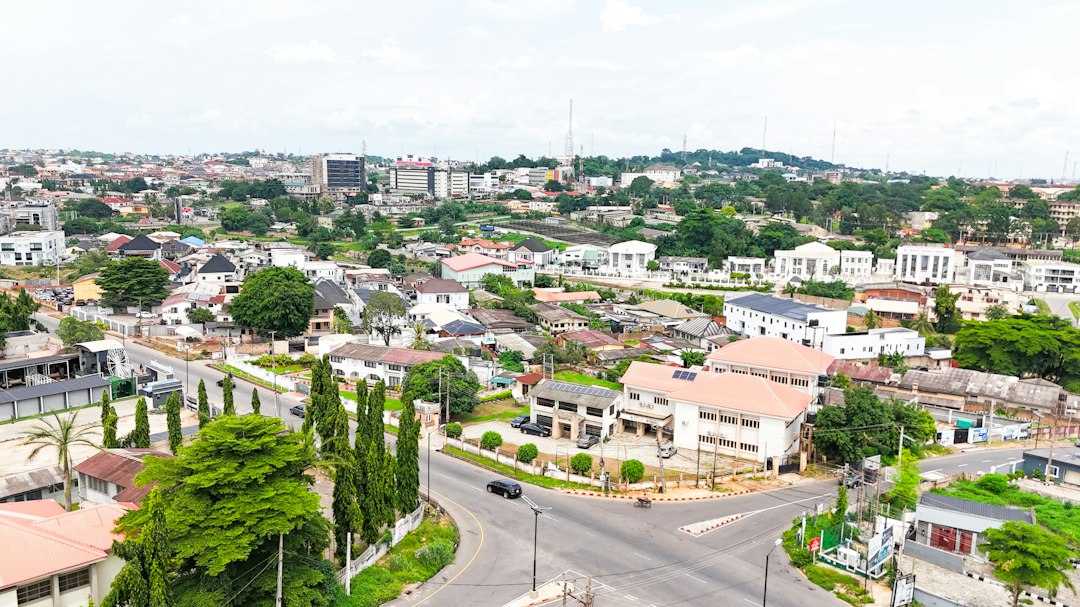
Ogun State is not just another state bordering Lagos. It is the industrial backbone of Nigeria's economy, hosting over 40% of the country's manufacturing facilities, according to BusinessDay. More than 3,500 industries operate across the state's six key industrial zones, spanning clusters in Agbara, Igbesa, Sango-Otta, Sagamu, and the rapidly expanding Mowe-Ibafo corridor.
The list of multinationals operating here reads like a who's who of African manufacturing. Nestlé Nigeria, Procter & Gamble, Lafarge Cement, Dangote Cement, CWAY Nigeria, and Rite Foods all run major production facilities in the state. These are not small operations. They employ thousands of workers, run multiple shifts, and draw in a steady stream of suppliers, logistics firms, and support businesses.
The Manufacturers Association of Nigeria (MAN) projects that the manufacturing sector's contribution to GDP will rise to 10.2% in 2026, up from 7.62% in 2025, according to AllAfrica. Ogun State stands to capture a disproportionate share of that growth given its existing industrial base.
And the state's finances reflect this momentum. Ogun's internally generated revenue surged from ₦52 billion in 2020 to ₦250 billion in 2025, a nearly fivefold increase that signals growing economic activity and greater government capacity to fund roads, utilities, and other infrastructure that makes land more valuable.
The Connection Between Factories and Rising Land Demand
Here is the part most land investors miss: every new factory that opens in Ogun State creates demand for residential land. Not eventually. Immediately.
When Nestlé or CWAY runs a production facility with 500 or 1,000 workers, those workers need somewhere to live. They need housing close enough to the factory to make the daily commute manageable. Their families need schools, clinics, and markets. This is not speculative demand; it is structural demand driven by employment.
Nigeria already faces a housing deficit of 15.2 million units, according to figures from the Federal Ministry of Housing and Urban Development. With over 54% of Nigerians now living in urban areas based on World Bank data, the pressure on housing in industrial corridors is intensifying, not easing.
Ogun State's population has grown to an estimated 7 million residents, according to Nigerian Informer, citing NBS projections. A significant portion of that growth is driven by people moving from Lagos, where rents and land prices have become unaffordable for the average worker. The Mowe-Ibafo corridor, sitting directly on the Lagos-Ibadan Expressway, has become the primary landing zone for these workers.
The pattern is straightforward: factories create jobs, jobs attract people, people need housing, and housing demand pushes land prices up. In Ogun State, this cycle is running at full speed.
Where Land Prices Are Moving Fastest Along the Industrial Belt
The data tells a clear story. Land values along Ogun State's industrial corridor, particularly in the Mowe-Ofada-Ibafo belt, have been appreciating at roughly 30.5% per year, according to market analysis from PropertyPro Nigeria. That is well above inflation and significantly ahead of returns from traditional savings accounts or fixed deposits.
As of August 2026, the average land price in Mowe-Ofada sits at approximately ₦7.5 million, with listings on Nigeria Property Centre ranging from ₦3 million for smaller plots to ₦15 million for premium 600sqm parcels with proper documentation.
How These Prices Compare to Lagos
For context, comparable plots in Lagos suburbs like Ajah, Ibeju-Lekki, or Ikeja GRA cost anywhere from ₦20 million to ₦80 million. Buyers in the Mowe corridor are paying 70 to 85% less for land that sits along the same economic artery as Lagos, the Lagos-Ibadan Expressway, and benefits from many of the same infrastructure investments.
This is not a comparison of rural land to urban land. The Mowe-Ibafo stretch is urbanising rapidly. New estates, commercial plazas, schools, hospitals, and filling stations are going up every month. The area functions as a satellite city of Lagos, with direct expressway access and proximity to the Red Line rail extension that connects Agbado in Ogun State to central Lagos.
Price Movement Over the Past Five Years
Five years ago, a standard plot in Mowe sold for between ₦800,000 and ₦2 million. Today, those same plots fetch ₦3 million to ₦7.5 million. Investors who bought in 2021 have seen their holdings grow by 200% to 300% in value. That kind of return is rare in any asset class, and it has been driven by fundamental demand, not speculation.
Crucially, this is not a bubble pattern. Bubbles are characterised by speculative buying with no underlying demand. In the Mowe-Ofada corridor, the demand is real and measurable: factories need workers, workers need homes, and there are not enough homes. As long as new industries keep opening and Lagos keeps pushing people outward, the upward pressure on land prices here will continue.
What Ogun State's Revenue Growth Tells Investors
One of the most underappreciated signals in Nigerian real estate is state-level internally generated revenue (IGR). When a state's IGR is growing, it means the government has more money to spend on infrastructure, which directly lifts land values.
Ogun State's IGR trajectory is striking. The jump from ₦52 billion in 2020 to ₦250 billion in 2025 represents a 380% increase in five years. The state's GDP is now estimated at ₦17 trillion, making it one of the most productive state economies in Nigeria outside of Lagos, according to data compiled by The Guardian Nigeria.
This revenue growth has translated into real infrastructure spending. The Lagos-Ibadan Expressway reconstruction, funded by the federal government through the Nigeria Sovereign Investment Authority (NSIA), continues to improve connectivity along the corridor. The state government has also prioritised road networks, school construction, and utility extensions in the Mowe-Ofada axis through its 2026 budget.
For land investors, this combination of private-sector industrial investment and public-sector infrastructure spending creates a powerful tailwind. Land that benefits from both tends to appreciate faster and more consistently than land that relies on only one growth driver.
Why the Timing Matters for Investors in 2026
Several factors are converging right now that make this window particularly important for investors considering Ogun State.
First, industrial expansion is accelerating. New industrial plants continue to open across the state. The Abiodun administration has made the business environment a priority, and the results are visible in the form of new factories, logistics centres, and warehousing facilities going up along the Mowe-Sagamu corridor.
Second, the new e-Consent system for land transactions, which took effect in April 2026, has brought greater transparency and accountability to the market. Buyers now have better tools to verify land documentation before purchasing, which reduces risk and builds confidence in the market.
Third, prices are still accessible. While 30% annual appreciation is impressive, the entry point in Mowe-Ofada remains well within reach for middle-income Nigerians and diaspora investors. Plots starting from ₦3 million with verified title documents represent a fraction of what you would pay in Lagos for a similar investment thesis.
The question for investors is not whether Ogun State's industrial belt will continue to grow. The factories are already there. The workers are already moving in. The question is whether you position yourself before the next wave of price increases, or after.
It is also worth noting that the state government is actively courting new industries. Governor Dapo Abiodun's administration has streamlined business registration, improved power infrastructure in industrial zones, and expanded road networks connecting factories to residential areas. This is the kind of coordinated push that turns a growth corridor into a permanent economic centre, and land values reflect that transition.
How to Invest in Land Along Ogun State's Growth Corridor
If you are considering buying land in the Mowe-Ofada industrial corridor, here is what to prioritise.
Look for proximity to the expressway and industrial clusters. Land within 5 to 15 minutes of the Lagos-Ibadan Expressway and near major employers (Nestlé, CWAY, Rite Foods) tends to appreciate fastest because it meets the housing needs of factory workers directly.
Verify documentation before you pay. In Ogun State, the key documents to look for are the Excision Gazette, Certificate of Occupancy (C of O), and Registered Survey. With the new e-Consent system, you can now verify these digitally. Never buy land without completing due diligence.
Consider estates with established infrastructure. Properties within structured estates, with access roads, perimeter fencing, and drainage already in place, command higher values and attract buyers faster when you decide to sell or develop.
Mowe Prime by Land Republic is positioned directly in the heart of this industrial corridor, on the Mowe-Ofada axis near major manufacturing facilities. Plots are available from ₦15,000,000 for 500sqm, with flexible payment plans including outright purchase and 6-month interest-free options. The estate comes with a Registered Survey and all standard Land Republic documentation.
The Bottom Line
Ogun State's land market is not rising on hype. It is rising because real factories are producing real goods, employing real people, and those people need places to live. With over 3,500 industries, a nearly fivefold increase in state revenue, and 30% annual land price appreciation in the industrial corridor, the fundamentals are as strong as they get in Nigerian real estate.
For investors who want to own land where the demand is structural and the growth is data-backed, the Mowe-Ofada corridor deserves serious attention.
Ready to invest in Ogun State's fastest-growing land corridor? Explore Mowe Prime by Land Republic or speak to the team directly at +234 812 222 2283. You can also visit www.landrepublic.co to browse all available properties across Lagos, Oyo, and Ogun States.