Benefits of Buying Land in Ibadan: Why Oyo State Leads Nigeria's Property Market in 2026
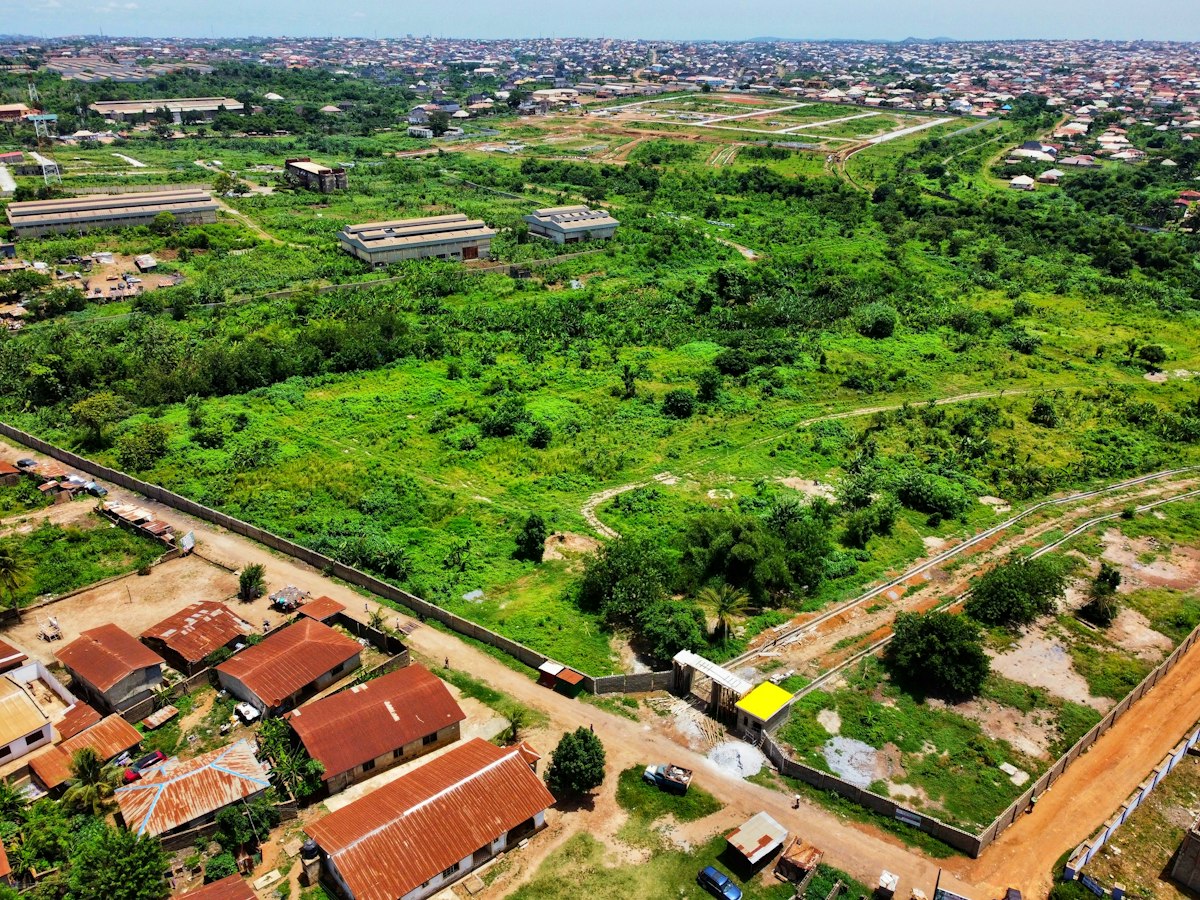
Why Ibadan? A Market That Refuses to Slow Down
While Lagos grabs headlines, Ibadan has been quietly building a case as the most attractive land market in Nigeria. The numbers are hard to argue with: a city approaching 5 million residents, over ₦235 billion in active infrastructure investment, and land prices that are still 50 to 70% below Lagos equivalents.
For investors looking for real returns on property, here are seven reasons Ibadan deserves your attention right now.
1. Land Prices That Still Make Sense
A 500-square-metre plot in Ibadan's growth corridors currently sells for between ₦1.5 million and ₦5 million, depending on the area. Compare that with Ajah in Lagos, where the same size plot starts at ₦10 million and climbs from there.
According to Nigeria Property Centre, there are currently over 980 active land listings in Ibadan, with some of the most affordable estate plots found along the Moniya-Iseyin corridor and in emerging suburbs like Ido and Akobo. This price advantage gives buyers room to enter the market with less capital while still positioning themselves in corridors where values are rising.
For context, 300-square-metre plots on the Moniya-Iseyin Road start from ₦1.65 million, while 500-square-metre plots are available from ₦2.2 million in structured estates with proper documentation.
This pricing gap between Ibadan and Lagos is not just about location. It reflects a fundamental market inefficiency. Ibadan offers the same things that make Lagos attractive to investors: population growth, commercial activity, improving infrastructure, and government attention. But the market has not fully priced in these advantages yet. For buyers who can read the signals, that is the opportunity.
2. Infrastructure Spending That Drives Appreciation
The Oyo State Government is not just talking about development. It is spending at a scale that Ibadan has never seen before.
The Ibadan Circular Road, a 110-kilometre highway designed to loop around the entire metropolis, is the centrepiece. The state government approved ₦235 billion for the second lot alone, a 39-kilometre stretch that is targeted for completion within 18 months. The first 32-kilometre segment is set for delivery before the end of 2026.
This is not just a road. The Circular Road Corridor Urban District covers approximately 2,616 hectares of mixed-use development, a programme that will open new residential, commercial, and industrial zones across six local government areas.
Add to that the Ibadan Airport expansion to a 1-million-passenger terminal, and you have a city that is building the infrastructure to support a much larger economy. Land near these corridors has historically seen the sharpest appreciation, and Ibadan is in the early innings of that cycle.
3. A Population Approaching 5 Million and Still Growing
Ibadan's population is estimated at nearly 4.9 million people in 2026, growing at approximately 4% per year. Oyo State as a whole is home to over 8.5 million residents, with an annual growth rate of about 2.3%, according to national demographic data.
More people means more demand for housing, more demand for commercial space, and more competition for well-located land. Nigeria already faces a shortage of nearly 28 million housing units, and cities like Ibadan carry a significant share of that deficit.
This is not speculation. It is arithmetic. A growing population in a city with limited serviced land supply means prices go in one direction over the medium to long term.
Ibadan is also attracting a wave of internal migration from Lagos. Younger professionals and remote workers are relocating to take advantage of lower living costs without sacrificing quality of life. This demographic shift is creating demand for serviced residential plots in areas that were considered rural just five years ago.
4. Real Estate Now Contributes 10.7% to Nigeria's GDP
Following the GDP rebasing by the National Bureau of Statistics (NBS), the real estate sector alone now contributes 10.7% to national output, up from 6.2% before the rebasing exercise. Combined with construction, the two sectors account for 15.9% of Nigeria's GDP.
This is not a niche market. Real estate is one of the pillars of the Nigerian economy. And within real estate, cities like Ibadan offer the best combination of entry price, growth potential, and government support.
Nigeria's GDP grew by 4.43% year-on-year in real terms in Q2 2026, with real estate and construction counted among the non-oil activities that drove the expansion. For land buyers, this means the economic tailwinds that support property values are getting stronger, not weaker.
5. Appreciation Rates That Outperform Savings and Fixed Deposits
Land in Ibadan's active corridors has appreciated at between 8% and 15% annually since 2023, according to market tracking data from ThinkMint. Areas directly tied to infrastructure projects, like zones near the railway terminal, have seen appreciation rates closer to 30% to 50% over two to three years.
Compare that with what your money earns sitting in a savings account. Even after the CBN's rate cut to 23% in September 2026, the effective yield on most savings products falls well below the appreciation rate on well-located Ibadan land.
The difference is that land is a real asset. It does not lose value when the naira fluctuates, and it cannot be inflated away the way cash savings can. Over a 3-to-5-year horizon, properly documented land in a growth corridor has consistently outperformed every other asset class available to the average Nigerian investor.
6. The CBN Rate Cut Signals a Shift That Favours Property
On September 22, 2026, the Central Bank of Nigeria cut the Monetary Policy Rate from 26.5% to 23%, a 350-basis-point reduction. Governor Olayemi Cardoso described it as an operational reset to support the transition to an inflation-targeting framework.
What does this mean for land buyers? Lower interest rates typically make borrowing cheaper, which increases demand for real estate. More importantly, the rate cut came alongside a continued decline in headline inflation, which fell to 15.39% in August 2026. This combination, falling rates with moderating inflation, creates one of the most favourable environments for property purchases that Nigeria has seen in several years.
For buyers who can move now, the window is open. Once lower rates feed through to increased demand, prices in desirable corridors will adjust upward.
7. Ibadan Is Cheaper Than Lagos But Connected to It
The completed Lagos-Ibadan Expressway has fundamentally changed how people think about Ibadan. Travel time from Berger in Lagos to Challenge in Ibadan now stands at 1 hour 15 minutes on a clear day. With the ongoing Phase 2 reconstruction adding underpasses and flyover bridges, that time will drop further.
This connectivity means you can live in or invest in Ibadan while maintaining ties to Lagos. Developers and individual buyers from Lagos increasingly see Ibadan as reachable, affordable, and viable for both residential and investment purposes. The expressway has already shifted investment patterns, and that trend is accelerating.
For 2026, market analysts project residential price growth of 5 to 15% across key Nigerian cities, with emerging infrastructure-linked hotspots like Ibadan's growth corridors likely to sit at the higher end of that range.
The railway line between Lagos and Ibadan has further compressed the distance. With a modern train service linking both cities, the old barrier of geographical separation is disappearing. For investors, this means Ibadan land is increasingly priced relative to Lagos demand, but has not yet caught up. That repricing process is where returns are made.
What About Risk? Understanding the Ibadan Market
Every property market carries risk, and Ibadan is no exception. The most common issues buyers face are land documentation problems, boundary disputes, and buying from unauthorized sellers. These are real concerns, but they are manageable.
The key is to work with developers who hold verified titles and survey documents. Look for properties with a registered survey plan, a valid Oyo State Certificate of Occupancy (C of O) or an excision from the state government. Ask to see the deed of assignment and confirm that the land is not under government acquisition or subject to any encumbrance.
Buying through an established developer like Land Republic eliminates most of these risks because the due diligence has already been completed. The company handles title verification, survey documentation, and post-purchase allocation, which removes the burden from the buyer.
Where to Buy Land in Ibadan Right Now
If you are ready to act on the data, Land Republic offers several verified properties across Ibadan's most promising corridors:
- Premier City, Moniya-Iseyin Road sits directly on one of Ibadan's fastest-appreciating corridors, benefiting from the completed Moniya-Iseyin highway and proximity to the new railway terminal.
- Ariya Springs, Ibadan offers residential plots in a structured estate with proper title documentation.
- The Pearl Residence, Ido is positioned in one of Ibadan's quieter but fast-growing suburban corridors, ideal for buyers who want to enter early.
- Oluyole Modern Market offers commercial property in one of Ibadan's busiest economic zones.
Every Land Republic property comes with verified documentation, flexible payment plans, and a team that walks you through the entire process from inspection to allocation.
Ready to Make Your Move?
The data is clear. Ibadan offers the best combination of affordability, growth potential, and infrastructure support of any property market in Nigeria right now. Whether you are a first-time buyer looking to build long-term wealth or a seasoned investor diversifying your portfolio, Oyo State's capital is where the smart money is going in 2026.
Visit landrepublic.co to explore available properties, or call +234 812 222 2283 to speak with our team today.