Moniya-Iseyin Corridor Ibadan: Why This Is Ibadan's Best Land Investment Opportunity in 2026
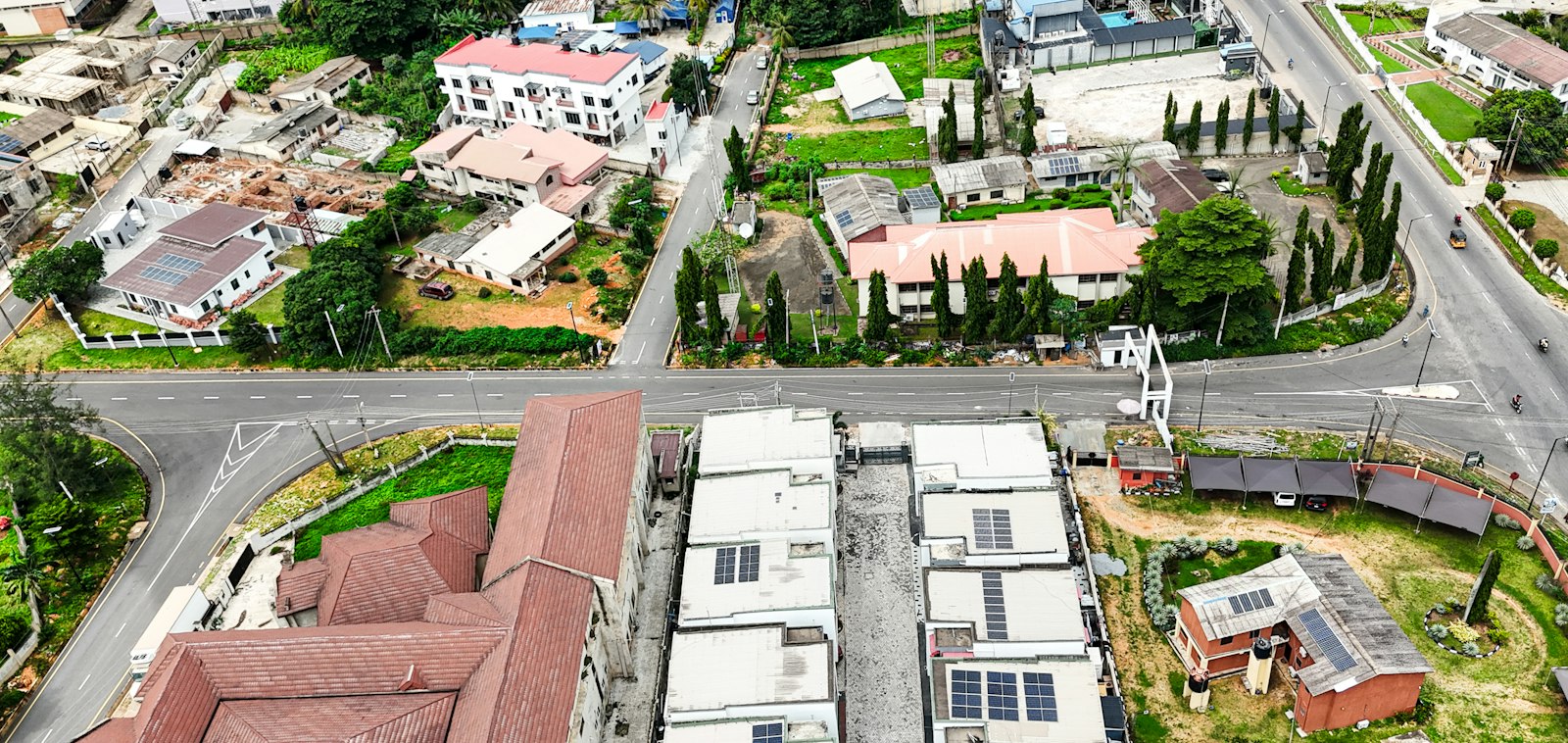
Why the Moniya-Iseyin Corridor Is Ibadan's Hottest Land Investment Frontier
If you have been watching Ibadan's real estate market, you already know the city is no longer just "affordable Lagos overflow." With a metro population of approximately 4.29 million growing at 3.5% annually, Ibadan adds over 100,000 new residents every year. And the fastest growth is not happening in the city centre. It is happening along new road corridors on the urban edge, where land is still affordable and infrastructure is finally catching up.
One corridor stands out: the Moniya-Iseyin axis in northern Ibadan. Here is what the data says about why it deserves your attention in 2026.
The Infrastructure That Changed Everything
For decades, the road linking Moniya to Iseyin was one of Oyo State's most notorious bottlenecks. That changed when the 65-kilometre Moniya-Ijaiye-Iseyin road was completed and commissioned in June 2021, built at a cost of ₦9.9 billion under Governor Seyi Makinde's administration. The project turned a pothole-scarred track into a modern dual carriageway that cut travel time between Ibadan's northern suburbs and rural Oyo towns by more than half.
But the government did not stop there. A separate 13.6-kilometre reconstruction of the Ojoo Interchange to IITA to Moniya Junction to Akinyele Interchange road is currently underway, contracted to Homan Engineering Company on an 18-month schedule. This second project connects the Moniya corridor directly to Ibadan's ring road network and the Lagos-Ibadan Expressway, giving residents and businesses a seamless route into the national highway grid.
When you combine both projects, the result is a north Ibadan transport spine that did not exist five years ago. And in Nigerian real estate, new roads create new value. Every time.
What Land Actually Costs Along the Moniya-Iseyin Road
One of the biggest attractions of this corridor is price. According to listings tracked on Nigeria Property Centre, land in the Moniya area currently averages approximately ₦1.5 million per plot (540 square metres), with residential plots near the Moniya-Iseyin road listing between ₦1.2 million and ₦3.6 million depending on proximity to the main road and level of estate development.
Compare that to broader Ibadan, where residential land in established areas like Bodija, Jericho, or Ring Road now ranges from ₦8 million to ₦30 million for 500 square metres. The Moniya corridor is priced at a fraction of those numbers, which means there is significant room for capital appreciation as the area develops.
For context, Nigeria Housing Market reports that Ibadan land appreciated by up to 80% between 2020 and 2024, with the Moniya and Akobo axes among the areas driving that growth. The Lagos-Ibadan rail link, improved road networks, and increasing migration from Lagos all contributed to the trend.
How Moniya Compares to Other Ibadan Growth Corridors
Ibadan has several active growth corridors. The Akobo-Bodija axis has attracted middle-class housing development but prices have already climbed past ₦5 million per plot. The Ologuneru-Ido corridor near the Ibadan-Abeokuta road is popular with budget buyers, but road infrastructure there remains inconsistent. The Iwo Road to Ojoo stretch benefits from commercial traffic but suffers from chronic congestion.
Moniya sits in a sweet spot. It is far enough from the congested core to offer affordable pricing, but close enough (roughly 25 minutes to the University of Ibadan, 40 minutes to Ring Road) to benefit from urban demand. The completed Moniya-Iseyin road and the ongoing Ojoo-Moniya interchange reconstruction give it better road connectivity than most competing corridors at the same price point.
Additionally, the area benefits from proximity to the International Institute of Tropical Agriculture (IITA), one of Africa's most important agricultural research centres and a significant local employer. The IITA campus sits between Ojoo and Moniya, and the road reconstruction project connecting these points will further integrate the corridor into Ibadan's economic fabric.
Ibadan vs Lagos: The Value Gap That Smart Investors Are Exploiting
Here is a number that should get your attention: Ibadan property is currently priced 50 to 65% below equivalent Lagos Mainland properties. A plot that costs ₦1.5 million in Moniya would cost ₦4 million to ₦8 million in comparable peri-urban Lagos locations like Ikorodu or Agbowa.
The rental yield story is equally compelling. Ibadan yields an estimated 9 to 13% on rental properties, compared to 6 to 10% in Lagos. While Lagos still leads on raw capital appreciation (8 to 14% per year versus 5 to 9% in Ibadan), the entry price difference means your percentage return on investment in Ibadan can actually exceed what you would earn in Lagos.
This is not a new pattern. Secondary cities across emerging markets consistently outperform primary cities on a return-per-naira basis once infrastructure arrives. The Moniya corridor is a textbook case of this dynamic playing out in real time.
Oyo State's Economy Is Backing the Growth
Land values do not rise in a vacuum. They need economic activity to sustain them. Oyo State's economy provides that foundation. The state's GDP stood at approximately ₦11.79 trillion as of 2023, ranking it fifth out of Nigeria's 36 states.
The current administration signed an ₦892 billion budget for 2026 with a strong focus on production and infrastructure. Even more encouraging, Oyo State reported ₦406.9 billion in revenue for the first half of 2026, hitting 91.2% of its target. A state that collects the revenue it budgets is a state that finishes the roads and utilities it promises. For land investors, that fiscal discipline translates directly into infrastructure delivery.
What Peri-Urban Growth Means for Moniya
There is a demographic pattern that makes corridors like Moniya particularly attractive. Census data shows that Ibadan's peri-urban areas grow at roughly 4.8% per year, nearly ten times the 0.5% annual growth rate of the city core. Young families, first-time homeowners, and small businesses are all moving outward in search of affordable land and space.
The Moniya-Iseyin corridor sits right in the path of this expansion. It offers what the city centre cannot: large plots at accessible prices, proximity to farming communities (which means food supply chains), and now, good road access to Ibadan's commercial centre, the University of Ibadan, and the Ibadan-Lagos corridor via Ojoo Interchange.
Estates in this zone are already responding to demand. Land Republic's Premier City development, located on the Moniya-Iseyin Expressway, is one example. The estate offers titled plots with verified documentation in a gated, structured community, giving buyers the security that open-market land along the same corridor often cannot guarantee.
Who Is Buying Along the Moniya-Iseyin Corridor?
The buyer profile along this corridor tells you a lot about where things are heading. Three distinct groups are active here:
Diaspora investors make up a growing share of purchases. Nigerians based in the UK, US, and Canada are increasingly looking at Ibadan as a hedge against Lagos's high entry prices. A plot at ₦1.5 million (roughly $900 at current exchange rates) is accessible in a way that Lagos never will be for someone sending money home from abroad.
Lagos-based professionals are the second group. Many of these buyers already own or rent in Lagos but want to build long-term wealth through land banking. They buy one or two plots in Ibadan, hold for three to five years, and sell at a multiple. The 80% appreciation seen between 2020 and 2024 validated this strategy.
Local first-time buyers are the third and fastest-growing segment. Young Ibadan residents priced out of areas like Bodija or Oluyole are turning to Moniya and surrounding communities for their first land purchase. This local demand creates a floor under prices that pure speculation cannot provide.
Three Things to Verify Before You Buy Along This Corridor
Opportunity attracts both legitimate developers and fraudsters. Before you commit money to any land along the Moniya-Iseyin axis, do these three things:
1. Confirm the Title Document
Look for land with a registered survey, a Certificate of Occupancy (C of O), or a Governor's Consent. Excision documents are also acceptable in many cases. If the seller cannot produce any of these, walk away.
2. Conduct a Physical Inspection
Visit the land. Check for encroachments, government acquisition markers, or ongoing disputes. The Moniya corridor has areas earmarked for road expansion and utility rights-of-way. Make sure your plot is not sitting on one.
3. Buy Through a Reputable Developer
Estate land from verified developers costs slightly more than open-market purchases, but it comes with legal documentation, community infrastructure, and significantly lower risk of title disputes. The premium is worth the peace of mind.
The Bottom Line for 2026
The Moniya-Iseyin corridor checks the three boxes that matter most for land investment: infrastructure improvement that is already built (not promised), prices that are still low relative to Ibadan's average, and a demographic wave pushing growth in its direction.
With land still available at ₦1.2 million to ₦3.6 million per plot, the window for entry-level investors is still open. But if the 80% appreciation that Ibadan saw between 2020 and 2024 is any guide, that window will not stay open forever.
Ready to Invest in Ibadan's Fastest Growing Corridor?
Land Republic's Premier City estate sits directly on the Moniya-Iseyin Expressway, offering titled, survey-backed plots in a structured, gated community. Whether you are buying for personal development or long-term investment, Premier City gives you verified land in the path of Ibadan's growth.
Explore Premier City on the Land Republic website or call +234 812 222 2283 to speak with an advisor today.