How Nigeria's 4.43% GDP Growth Is Driving a Real Estate Surge in Ibadan: What Buyers Need to Know
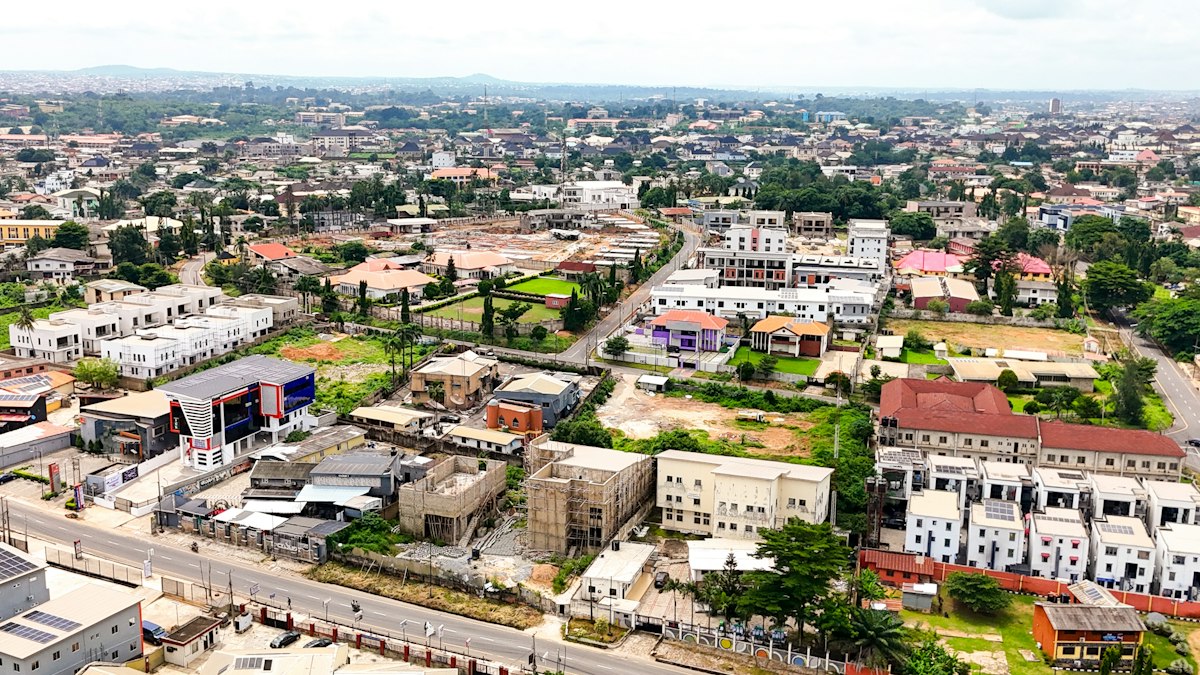
Nigeria's Economy Is Growing at Its Fastest Pace in Five Years. Here's Why That Matters for Land Buyers in Ibadan.
In August 2026, the National Bureau of Statistics (NBS) released data that made headlines: Nigeria's GDP grew by 4.43% year-on-year in Q2 2026, the fastest expansion since Q2 2021. The non-oil sector, which includes real estate, trade, and construction, grew by 4.31%, up from 3.64% in the same quarter last year.
For anyone watching Nigeria's property market, particularly in secondary cities like Ibadan, this is not just a statistic. It is a signal. When an economy accelerates, capital flows into tangible assets. And across Oyo State, that capital is increasingly flowing into land.
This article breaks down what the GDP numbers mean for land buyers in Ibadan, which corridors are benefiting the most, and how to position yourself before the next price cycle kicks in.
What the GDP Data Actually Says About Real Estate
According to the Nigeria Housing Market, real estate was specifically named as one of the key drivers of non-oil sector growth in Q2 2026. The sector now contributes approximately 10.7% of Nigeria's GDP, making it the country's third-largest economic sector.
This is not abstract. When real estate contributes more to GDP, it means more construction activity, more transactions, more demand for serviced plots, and more pressure on land prices in high-growth areas.
The Voice of Nigeria reported that the services sector, which includes real estate services, grew by 4.60% in Q2 2026, up from 3.94% in the same quarter of 2025. Construction and manufacturing, both linked to property development, also expanded.
Why Ibadan Is at the Centre of This Boom
Lagos dominates Nigeria's real estate conversation, but the numbers tell a different story for investors seeking value. According to PropertyPro Nigeria, over 1,300 land listings are active in Ibadan as of September 2026, with prices ranging from N800,000 to over N1 billion depending on location and title status.
But here's the critical insight: Ibadan properties show 15%+ annual growth at prices that are 40 to 60% cheaper than comparable locations in Lagos. A 500 sqm plot in Ibadan's Moniya corridor currently sells for N1.5 million to N2.5 million. The same sized plot in Ajah or Ibeju-Lekki would cost N15 million to N30 million.
Three structural factors are driving Ibadan's surge:
1. Infrastructure Investment Is Reshaping the City
The Oyo State Government has committed record capital expenditure to road construction. According to the state's budget data, 368.9 kilometres of roads have been completed under the current administration. The standout project is the 110-kilometre Ibadan Circular Road, whose first phase (a 32 km South-East Wing from the Lagos-Ibadan Expressway to Badeku Village) is set for completion before year-end.
History shows a consistent pattern in Nigerian real estate: once road construction reaches visible completion, land prices in surrounding areas jump 20% to 40% within 12 to 18 months. Plots along new road corridors in Ibadan have already seen appreciation rates of 8% to 15% annually since 2023.
2. Rail Connectivity Has Opened a Lagos-Ibadan Commuter Corridor
The Lagos-Ibadan Standard Gauge Railway is operational, and Moniya hosts one of its key stations. This gives Ibadan residents and workers direct rail access to Lagos, a game changer for professionals who want affordable housing without abandoning Lagos-based careers.
The result: areas around Moniya, Ojoo, and the Iseyin Road corridor are experiencing a wave of residential estate development targeting middle-income earners priced out of Lagos.
3. The Ibadan Inland Dry Port Is Creating Commercial Demand
The Federal Government-approved Ibadan Inland Dry Port in Akinyele is under development. The Nigerian Railway Corporation relaunched the Apapa-Ibadan Standard Gauge Rail for container haulage in February 2025, creating a direct freight link between Lagos ports and Ibadan's hinterland.
For land investors, this means commercial and mixed-use plots near the dry port corridor will see sustained demand from logistics companies, warehousing operators, and ancillary businesses. This is not speculative; it follows the pattern seen around the Apapa-Oshodi corridor when the Lagos port expanded.
Where the Smart Money Is Going in Ibadan Right Now
Based on current market data and infrastructure timelines, these corridors offer the strongest combination of entry price and growth potential:
The Moniya-Iseyin Road Corridor
Following the completion of the 65 km road reconstruction (delivered by Kopek Construction at N9.9 billion), this corridor has become Ibadan's fastest-appreciating land market. Current prices: N500,000 for 150 sqm, N1 million for 300 sqm, and N1.5 million for 500 sqm. Land Republic's Premier City estate sits directly on this corridor, offering titled, surveyed plots with flexible payment plans.
The Ido Corridor
Land prices in Ido range from N2,000 to N15,000 per square metre, putting a standard 500 sqm residential plot between N1 million and N7.5 million. The corridor benefits from proximity to the University of Ibadan and the proposed Ibadan Circular Road alignment.
The Akobo-Ojurin Axis
PropertyPro data shows that plots in this area have tripled in price over the past five years. According to PropertyPro, the average land price in Moniya is currently N2.5 million per plot, compared to N85 million in Bodija. That price gap represents both the current opportunity and the trajectory of future growth.
Nigeria's Housing Deficit: The Demand That Will Not Disappear
Behind the GDP numbers is a structural reality that protects land values from speculative collapse: Nigeria has a housing deficit of approximately 14.9 million units, according to the most recent data from the National Housing Data Technical Committee.
This deficit is not shrinking. With an annual requirement of roughly 700,000 new homes and current delivery falling far below that, demand for buildable, titled land in growth cities like Ibadan will remain strong for decades.
The Federal Government has responded with targeted projects. In Ibadan, the government is constructing 250 housing units consisting of 50 one-bedroom, 150 two-bedroom, and 50 three-bedroom semi-detached bungalows. While welcome, 250 units against a deficit of millions underscores why private land investment remains the primary path to addressing housing needs.
What This Means for Different Types of Buyers
For First-Time Buyers
Ibadan's current price point (N500,000 to N3 million for a residential plot) is the most accessible entry into Nigerian real estate. With GDP growth driving construction activity and infrastructure completion pushing prices up, the window for sub-N2 million plots in high-growth corridors is narrowing. If you are saving toward your first land purchase, Ibadan offers the best value-for-money proposition in Southwest Nigeria right now.
For Investors and Land Bankers
The combination of 4.43% GDP growth, active infrastructure delivery, and the Ibadan Circular Road timeline creates a clear thesis: buy in corridors that sit along planned or under-construction infrastructure, hold for 3 to 5 years, and benefit from the 20 to 40% price jump that follows road completion. Historically, well-located plots in Ibadan have appreciated from N250,000 to N800,000 to N1.5 million over a five-year period.
For Diaspora Nigerians
Ibadan's price accessibility, combined with the availability of titled estates with verified documentation, makes it one of the safest entry points for overseas investors. Unlike Lagos, where land disputes and "omo onile" issues are widespread, many Ibadan estates offer Governor's Consent or registered survey titles at a fraction of the cost.
How to Position Yourself Before the Next Price Cycle
GDP growth does not push land prices up overnight. There is typically a 6 to 18-month lag between economic acceleration and noticeable price movement in secondary cities. That lag is your window.
Here's a practical approach:
Step 1: Identify corridors with active infrastructure projects (Ibadan Circular Road, Moniya-Iseyin Road, dry port corridor).
Step 2: Verify title documentation. Look for estates with registered survey plans, C of O processing, or Governor's Consent.
Step 3: Use flexible payment plans. Many estates along these corridors, including Land Republic's properties in Ibadan, offer 6 to 12-month payment plans that let you lock in today's prices while spreading the cost.
Step 4: Start with one plot. You do not need to buy an acre. A single 300 sqm to 500 sqm plot in a growth corridor is enough to participate in the appreciation cycle.
The Bottom Line
Nigeria's 4.43% GDP growth in Q2 2026 is not a one-off spike. It reflects a structural economic recovery that is pushing capital into real estate, particularly in cities like Ibadan where infrastructure investment, rail connectivity, and affordable entry prices are converging.
The data points are clear: real estate is contributing 10.7% to GDP, Ibadan's land prices are growing at 15%+ annually, and the city's infrastructure pipeline (circular road, dry port, railway) is creating new growth corridors that did not exist five years ago.
For buyers who act within the current price window, the opportunity is not just about owning land. It is about owning an asset in a market where demand is structural, supply is constrained, and the economic fundamentals are moving in your favour.
Ready to Invest in Ibadan's Growth Story?
Land Republic offers titled, surveyed plots in Ibadan's fastest-growing corridors, including Premier City on the Moniya-Iseyin Road and The Pearl Residence in Ido. Flexible payment plans start from N500,000.
Call or WhatsApp: +234 812 222 2283
Visit www.landrepublic.co/properties to explore available plots and secure your investment before the next price cycle begins.