Why Ogun State Land Is Outperforming Lagos: Prices, Industrial Growth, and Where to Buy in 2026
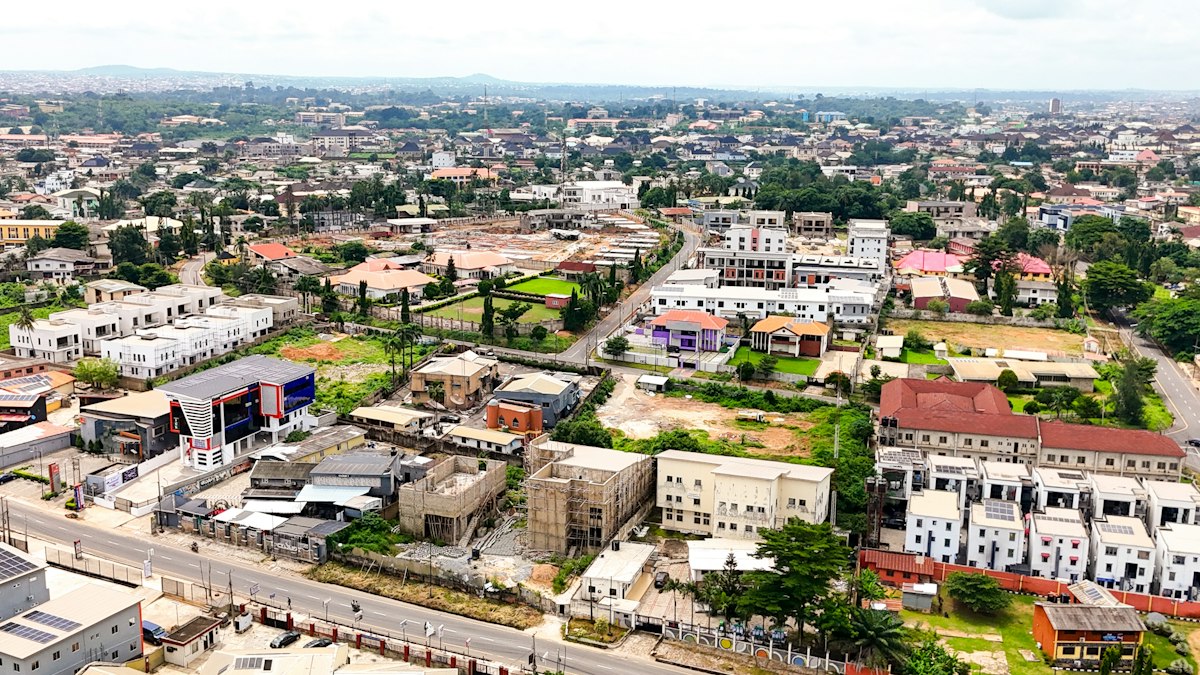
When most people think about buying land in Nigeria, Lagos comes to mind first. But a growing number of investors are looking next door, to Ogun State, and the data suggests they're onto something. With land prices 60 to 70 percent lower than Lagos, over 6,000 registered factories, and a state budget that just expanded by 58 percent, Ogun is quietly positioning itself as Nigeria's most attractive property market.
This isn't just hype. The numbers from the National Bureau of Statistics, the Manufacturers Association of Nigeria (MAN), and independent governance indices all point in the same direction: Ogun State is growing faster, spending more on infrastructure, and attracting more industrial investment than almost every other state in the country. For land buyers willing to look beyond the Lagos postcode, that growth translates into opportunity.
The Industrial Engine Driving Ogun State's Property Boom
Ogun State is not a new player in Nigerian manufacturing. It has been the country's industrial backbone for decades, hosting major operations for companies like Nestle Nigeria, Dangote, Unilever, CWAY, and Rite Foods across clusters in Agbara, Sango-Otta, Sagamu, and Ifo.
But the pace of growth in recent years has been remarkable. According to the Daily Trust, the state now hosts over 6,000 registered industrial firms. Data from OGUNINVEST's 2024 mid-year report shows more than 140 new factory registrations in the first half of 2024 alone, representing a 32 percent increase compared to the same period in 2023.
The investment figures tell an even more compelling story. According to data from the Manufacturers Association of Nigeria, Lagos and Ogun together attracted N1.74 trillion in industrial investments between 2024 and 2025. That represents 87.32 percent of Nigeria's entire industrial investment during that period. The remaining 34 states shared just N252.23 billion.
Factories need workers. Workers need housing. Housing needs land. That supply chain of demand is what makes Ogun State's industrial dominance directly relevant to land buyers.
What the Numbers Say: Revenue, Investment, and GDP Growth
Nigeria's real estate sector is having a strong year. According to the NBS Q2 2026 GDP report, the real estate sector grew 3.76 percent year-on-year, up from 2.29 percent in Q1. Real estate now accounts for 12.71 percent of Nigeria's total GDP, making it the third-largest economic activity behind trade and crop production. The construction sector grew even faster at 6.75 percent.
Ogun State's own fiscal trajectory mirrors this national trend, but with sharper upward momentum. NBS figures show the state's internally generated revenue (IGR) rose from N100.7 billion in 2022 to N140.1 billion in 2024, a 39 percent increase driven largely by land transactions, factory levies, and logistics taxes. For 2026, the state is targeting N500 billion in IGR.
The state's 2026 budget of N1.668 trillion represents a 58 percent jump from the 2025 figure of N1.054 trillion, with N526 billion earmarked for infrastructure and over N1 trillion for capital projects. This isn't theoretical planning. It's money being deployed into roads, housing, and industrial zones that directly affect property values.
The results are showing up in external assessments too. Ogun State ranked second in Nigeria in the 2025 Phillips Consulting State Performance Index (pSPI), behind only Lagos. That's its highest-ever ranking.
Infrastructure Projects Reshaping the Ogun Corridor
Three major infrastructure projects are transforming land values across Ogun State right now.
Lagos-Ibadan Expressway Reconstruction
The Lagos-Ibadan Expressway is Nigeria's busiest highway, and its reconstruction has been a game-changer for every community along the corridor. The main carriageway is largely in use, and in July 2026, President Tinubu approved full reconstruction of the Ibadan-bound stretch using reinforced concrete technology designed to last 50 to 100 years. In November 2025, the Federal Executive Council approved N43 billion for highway works, including flyovers at key junctions in Magboro, Arepo, and Sagamu.
For property buyers, the expressway effect is simple: better roads mean shorter commute times, which push demand outward from Lagos into Ogun State towns like Mowe, Ibafo, and Magboro.
Remo Free Trade Zone
A $400 million joint venture between the Ogun State government and ARISE Integrated Industrial Platforms, the Remo Free Zone sits within a 5,000-hectare economic development cluster. The first phase (423 hectares) was 38 percent complete as of May 2025, with completion targeted for December 2026. The project aims to create 40,000 jobs in its first phase alone. Six companies have already secured plots.
Ogun Deep-Sea Port
Perhaps the most transformative project on the horizon is the Dangote Olokola Deep-Sea Port, a partnership with DP World, with construction reportedly starting in November 2026. A deep-sea port would fundamentally alter the logistics landscape of southwestern Nigeria and create massive demand for industrial and residential land across Ogun State.
Current Land Prices in Ogun State (2026)
Land in Ogun State remains significantly cheaper than equivalent plots in Lagos, though prices vary widely depending on location, title documentation, and proximity to the expressway.
According to Nigeria Property Centre's Q3 2026 data, the median asking price for land in Mowe-Ofada is approximately N7 million per plot, with listings ranging from N1.5 million for bare outskirts plots to N40 million for premium commercial land near the expressway.
Here's what the current market looks like by area:
- Mowe-Ofada (residential estates): N3 million to N7.5 million for 300 to 600 sqm plots in gated communities
- Mowe Town (expressway-adjacent): N9 million to N15 million median, driven by commercial demand
- Ibafo: N2.5 million to N15 million depending on title and road access
- Emerging areas (Ofada, Simawa): N1.5 million to N4.5 million, the cheapest entry points
- Expressway-facing commercial plots: N15 million to N35 million and above
The most important price driver is title documentation. Plots with a Certificate of Occupancy (C of O) command a premium of 40 to 60 percent over those with just survey plans or receipts. Always verify title status with a lawyer before making any payment.
Ogun vs Lagos: A Side-by-Side Price Comparison
The value gap between Ogun and Lagos is stark. According to market estimates from Lexshield Properties, here's how equivalent residential plots compare:
- 300 sqm in a gated estate: N3 million to N4 million in Mowe vs N15 million to N25 million in Lagos
- 600 sqm residential: N6 million to N7.5 million in Mowe vs N30 million to N50 million in Lagos mainland
That's a 70 to 80 percent discount for land that sits just 40 minutes from Lagos on a completed expressway. For buyers who work in Lagos but want to build wealth through property, Ogun State offers a chance to enter the market at a fraction of the cost.
The comparison becomes even more compelling when you factor in growth potential. Ogun State is where the factories are being built, where the budget is expanding fastest, and where the next wave of housing demand will come from. Lagos prices have already been bid up by decades of urbanization. Ogun's growth curve is still in its early stages.
Where Exactly to Buy: The Mowe-Ibafo Corridor
Not all parts of Ogun State offer the same investment potential. The sweet spot for most buyers is the Mowe-Ibafo corridor along the Lagos-Ibadan Expressway.
This stretch benefits from three converging advantages: proximity to Lagos (a 30 to 45 minute drive), direct expressway access, and location within Ogun's industrial belt. Major employers like Nestle and Dangote operate nearby, generating steady demand for worker housing.
Land Republic's Mowe Prime estate sits directly in this corridor, offering titled plots in a planned community with infrastructure already in progress. For buyers looking at the Ogun opportunity, it represents a structured entry point with verified documentation and development oversight, two things that matter enormously in a market where land fraud remains a real risk.
Key Risks and What to Watch For
No investment is without risk, and Ogun State land is no exception. Here are the main things to watch:
Title verification is non-negotiable. The gap between a C of O plot and an undocumented one can mean the difference between a solid investment and a legal nightmare. Never buy without engaging an independent lawyer to conduct a title search at the Ogun State Lands Bureau.
Infrastructure timelines can slip. The Lagos-Ibadan Expressway has missed multiple completion deadlines, and the Remo Free Zone and deep-sea port are still in development. Factor in potential delays when planning your investment horizon.
Not all "Ogun State" is created equal. Prices and development levels vary enormously between expressway-corridor towns and remote interior locations. Stick to established corridors with verifiable demand drivers unless you have deep local knowledge.
Ogun community (Omo Onile) issues exist. While less prevalent in organized estates, community land disputes can affect buyers in unstructured areas. Buying through a reputable developer with clear community agreements reduces this risk significantly.
Ready to Invest in Ogun State? Start Here
Ogun State's property market is backed by real economic fundamentals: industrial investment, government spending, infrastructure development, and the natural spillover from Lagos. The data from NBS, MAN, and independent governance rankings all confirm what buyers on the ground are already seeing.
If you're considering buying land in the Ogun corridor, explore Mowe Prime by Land Republic. It offers titled plots in the heart of the Lagos-Ibadan expressway corridor, backed by proper documentation and an established development plan.
To speak with a Land Republic advisor about available plots, pricing, and payment plans, call +234 812 222 2283 or visit www.landrepublic.co.